Featured
25 years of Drupal: what I've learned
Drupal began as a hobby and became part of the web’s infrastructure. Looking back after 25 years, here are the lessons I learned about people, scale, leadership, and building something that lasts.
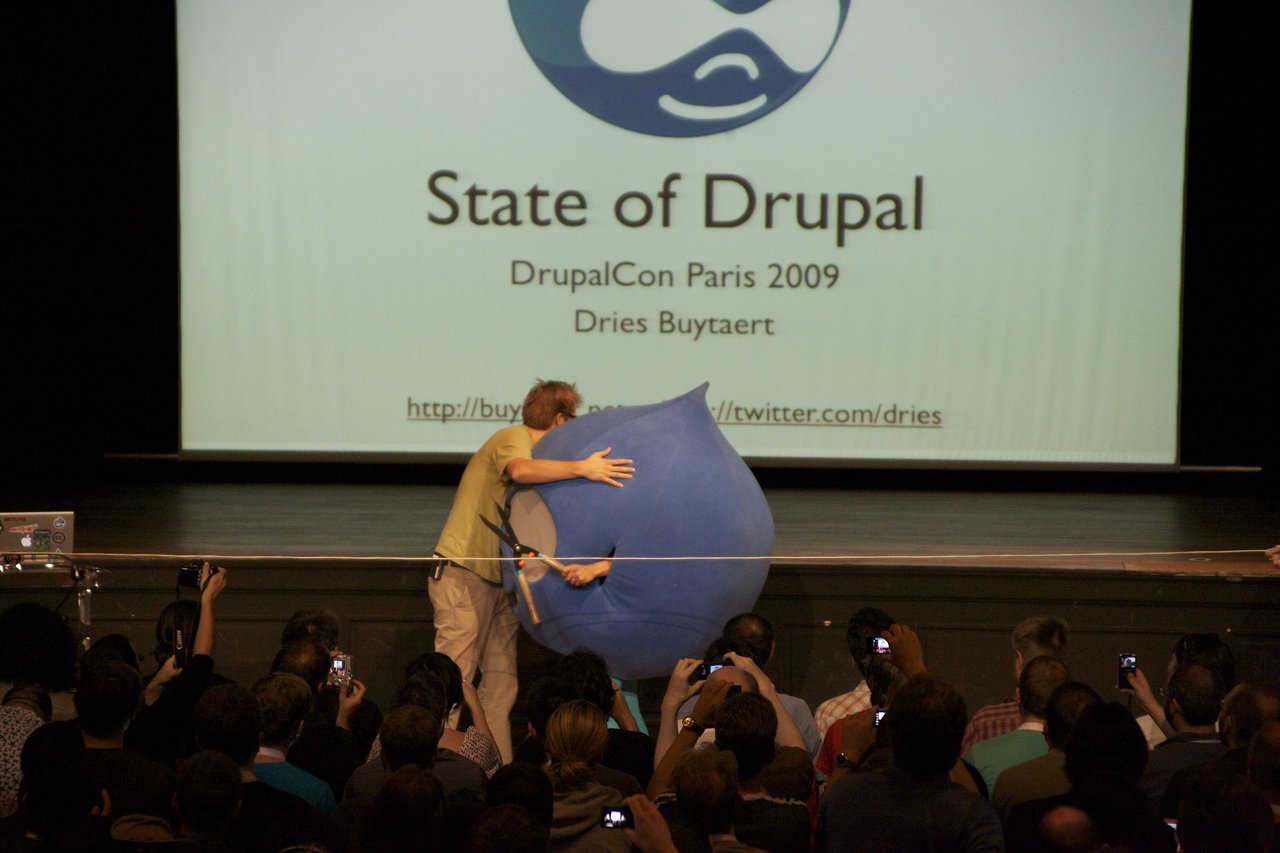
Drupal turns 25 today. A quarter of a century.
What started as a hobby became a community, and then, somehow, a pillar of the web's infrastructure.
Looking back, the most important things I learned weren't really about software. They were about people, scale, and what it takes to build something that lasts.
Twenty-five years, twenty-five lessons.
1. You can do well and do good
I used to think I had to choose: build a sustainable business or build something generous. Drupal taught me that is a false choice. Growth and generosity can reinforce each other. The real challenge is making sure one does not crowd out the other.
2. You can architect for community
Community doesn't just happen. You have to design for it. Drupal's modular system created clear places to contribute, our open logo invited people to make their own variants, and our light governance made it easy for people to step into responsibility. You cannot force a community to exist, but you can create the conditions for one to grow.
3. A few decisions define everything
Most choices don't matter much in hindsight, but a few end up shaping a project's entire trajectory. For Drupal, that included licensing under the GPL, the hook system, the node system, starting the Drupal Association, and even the credit system. You never know which decisions those are when you're making them.
4. Coordination is the product
In the early days, coordination was easy: you knew most people by name and you could fix things in a single late night IRC conversation. Then Drupal grew, slowly at first and then all at once. I remember release cycles where the hardest part was not the code but aligning hundreds of people across time zones, cultures and priorities, with far too much energy spent "bike shedding". That is when I learned that at scale, code is not the product. It is what we ship, but coordination is what makes it possible.
5. Everyone's carrying something
I've worked with people navigating challenges I couldn't see at first. Mental health struggles, caregiving burdens, personal crises. It taught me that someone's behavior in a moment rarely tells the whole story. A healthy community makes room for people. Patience and grace are how you keep good people around.
6. Nobody fully understands Drupal anymore, including me
After 25 years and tens of thousands of contributors, Drupal has grown beyond any single person's understanding. I also google Drupal's documentation. I'm strangely proud of that, because it's how I know it has become something bigger than any one of us.
7. Volunteerism alone doesn't scale
In the early years, everything in Drupal was built by volunteers, and for a long time that felt like enough. At some point, it wasn't. The project was growing faster than the time people could give, and some important work needed more hands. Paid contributors brought stability and depth, while volunteers continued to innovate. The best projects make room for both.
8. Your words carry more weight than you realize
As recently as a few weeks ago, I sent a Slack message I thought was harmless and watched it create confusion and frustration. I have been making that same mistake, in different forms, for years. As a project grows, so does the gravity of what you say. A passing comment can redirect weeks of work or demoralize someone who is trying their best. I had to learn to speak more carefully, not because I am important, but because my role is. I am still learning to do this better.
9. Maintenance is leadership with no applause
The bottleneck in Open Source is rarely new ideas or new code. It's people willing to maintain what already exists: reviewing, deciding, onboarding new people, and holding context for years. I have seen projects stall because nobody wanted to do that work, and others survive because a few people quietly stepped up. Maintainers do the work that keeps everything together. If you want a project to last, you have to take care of your maintainers.
10. Culture is forged under stress
The Drupal community was not just built on good vibes. It was built in the weeks before releases and DrupalCons, in late night debugging sessions, and in messy moments of disagreement and drama. I have seen stress bring out the best in us and, sometimes, the worst. Both mattered because they forced us to learn how to disagree, decide, and recover. Those hard moments forged trust you cannot manufacture in calm times, and they are a big reason the community is still here.
11. Leadership has to outgrow its founder
For Drupal to last, leadership had to move beyond me, and for that to happen I had to let go. That meant stepping back from decisions I cared deeply about and trusting others to take the project in directions I might not have chosen. There were moments when I felt sidelined in the project I started, which was nobody's fault, but not easy. Letting go was not always easy, but it is one of the reasons Drupal is still here.
12. Open Source is not a meritocracy
I used to say that the only real limitation to contributing was your willingness to learn. I was wrong. Free time is a privilege, not an equal right. Some people have jobs, families, or responsibilities that leave no room for unpaid work. You can only design for equity when you stop pretending that Open Source is a meritocracy.
13. Changing your mind in public builds trust
Over the years, I've had to reverse positions I once argued for. Doing that in public taught me that admitting you were wrong builds more trust than claiming you were right. People remember how you handle being wrong longer than they remember what you were wrong about.
14. Persistence beats being right early
In 2001, Open Source was a curiosity that enterprises avoided. Today, it runs the world. I believed in it long before I could prove it. I kept working on Drupal anyway. It took many years for the world to catch up. That taught me that sticking with something you believe in matters more than being right quickly.
15. The hardest innovation is not breaking things
For years, I insisted that breaking backward compatibility was a core value. Upgrades were painful, but I thought that was the price of progress. The real breakthrough came when we built enough test coverage to keep moving forward without breaking what people had built. Today, Drupal has more than twice as much test code as production code. That discipline was harder than any rewrite, and it earned more trust than any new feature.
16. Most people are here for the right reasons
Every large community has bad actors and trolls, and they can consume all your attention if you let them. If you focus too much on the worst behavior, you start to miss the quiet, steady work of the many people who are here to build something good. Your energy is better spent supporting those people.
17. Talk is silver, contribution is gold
Words matter. They set direction and invite people in. But the people who shaped Drupal most were the ones who kept showing up to do the work. Culture is shaped by what actually gets done, and by who shows up to do it.
18. Vision doesn't have to come from the top
For a long time, I thought being project lead meant having the vision. Over time, I learned that it meant creating the conditions for good ideas to come from anywhere. The best decisions often came from people I'd never met, solving problems I didn't know we had.
19. The spark is individual but the fire is not
A single person can change a project's direction, but no contribution survives on its own. Every new feature comes with a maintenance cost and eventually depends on people the original author will never meet. Successful projects have to hold both truths at once: the spark is individual, but the fire is not.
20. At scale, even your bugs become features
Once enough people depend on your software, every observable behavior becomes a commitment, whether you intended it or not. Sooner or later, someone will build a workflow around an edge case or quirk. That is why maintaining compatibility is not a lesser form of work. It is core to the product.
21. A good project is measured by what people build next
For a long time, it felt like a loss when top contributors moved on from Drupal. Over time, I started to notice what they built next and realized they were carrying what they learned here into everything they did. Many went on to lead teams, start companies, or lead other Open Source projects. I have come to see that as one of Drupal's most meaningful outcomes.
22. Longevity comes from not chasing trends
Drupal is still here because we resisted the urge to chase every new trend and kept building on things that last, like structured content, security, extensibility, and openness. Those things mattered twenty years ago, they still matter today, and they will still matter twenty years from now.
23. If it matters, keep saying it
A community isn't a room. People join at different times, pay attention to different things, and hear through different filters. An idea has to land again and again before it takes hold. If it matters, keep saying it. The ideas that stick are the ones the community picks up and carries forward.
24. It takes a community to see the whole road
Sometimes the path forward seems clear. An individual can see a direction, but a community sees the terrain: the cracks, the forks, and the doubts. Being right alone brings clarity. Bringing others along brings confidence.
25. Start before you feel ready
When I released Drupal 1.0.0, I knew almost nothing. For much of the journey, I felt out of my depth. I was often nervous, sometimes intimidated. I didn't know how to scale software, how to build a community, or how to lead. I kept shipping anyway. You don't become ready by waiting. You become ready by doing.
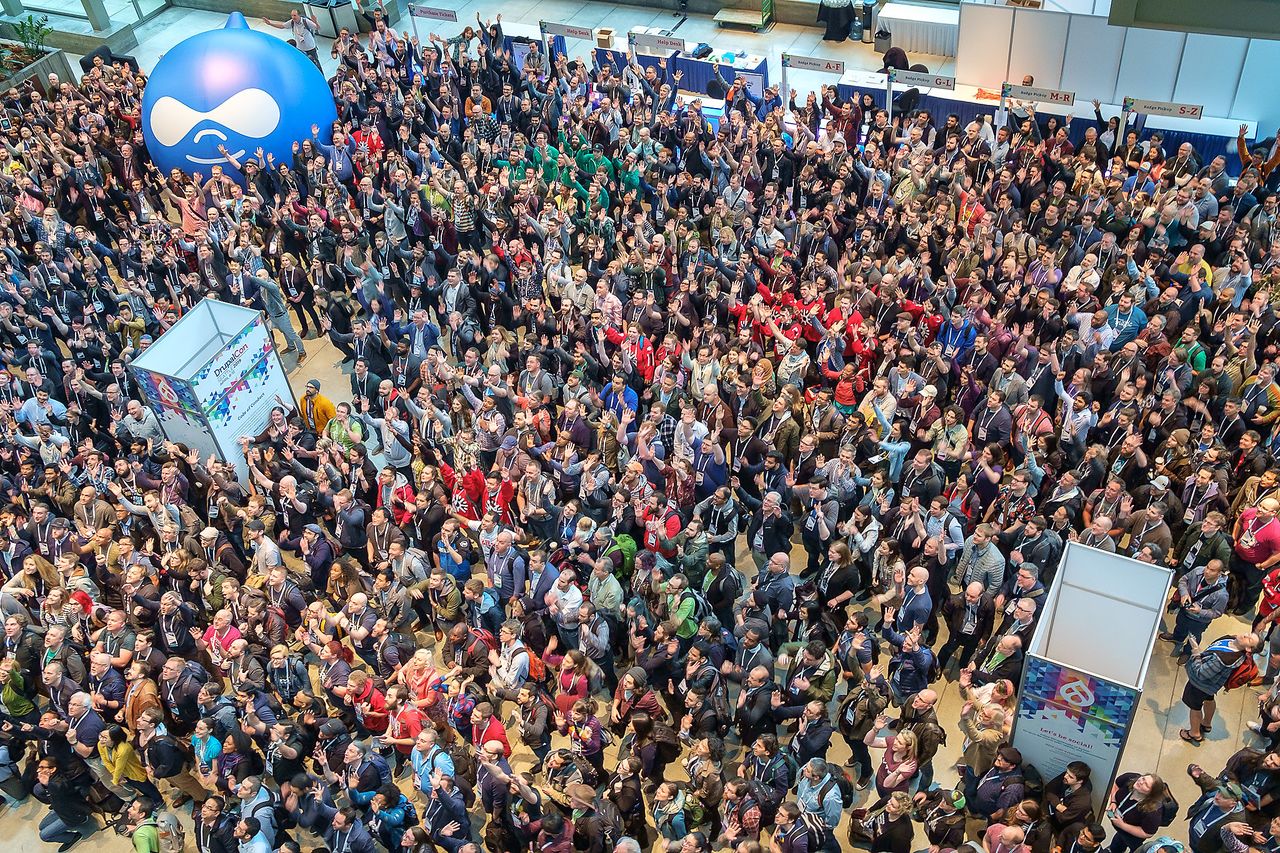
For those who have been here for years, these lessons will feel familiar. We learned them together, sometimes slowly, sometimes through debate, and often the hard way.
If Drupal has been part of your daily life for a long time, you are not just a user or a contributor. You are part of its history. And for all of you, I am grateful.
I am still here, still learning, and still excited about what we can build together next. Thank you for building it with me.
Join 5,000+ readers. I'm the founder of Drupal and co-founder of Acquia. I write about Open Source, AI, and the future of the web, with a focus on building, scaling, and thinking long-term.